
Does Glucosamine Work? An Honest Look at the Evidence Behind JointBrex
For most people, not by enough to feel. The GAIT trial of 1,583 adults found glucosamine did not beat placebo overall. Pooled trials cut pain by 0.4 cm on a 10 cm scale, below the 0.9 cm patients notice. The ACR guideline strongly recommends against glucosamine for knee and hip osteoarthritis. Exercise and weight loss work better.
What is glucosamine, and why do people take it?
Glucosamine is an amino sugar. Your body makes it, and it is a building block of cartilage, the smooth tissue at the ends of bones. Supplement glucosamine is usually made from shellfish shells, though some is made by grain fermentation (LiverTox, Glucosamine, 2018).
The idea behind the pill is simple. If cartilage needs glucosamine, maybe more of it helps sore knees. That idea made it one of the best-selling joint supplements. The real question is whether trials back it up. People search for it in many ways: does glucosamine work for joints, for knee pain, for arthritis. This post walks through the four sources that matter most.
The four sources this post summarizes
| Source | Type | Main finding |
|---|---|---|
| GAIT, 2006 | Large US trial, 1,583 adults | No significant overall benefit over placebo |
| Wandel, 2010 | Meta-analysis, 10 trials | Pain changes below what patients notice |
| Cochrane, 2015 | Review of chondroitin trials | Small short-term benefit, mostly low-quality trials |
| ACR, 2019 and 2026 | US clinical guideline | Strongly recommends against glucosamine |
Does glucosamine work? What the GAIT trial found
GAIT found no significant overall benefit. It was a large US trial of 1,583 adults with knee osteoarthritis followed for 24 weeks. People took glucosamine 1,500 mg, chondroitin 1,200 mg, both, celecoxib (a prescription pain drug) or a placebo each day (Clegg et al., 2006 (GAIT, NEJM)).
The main result was the share of people whose pain fell by at least 20%. The table shows how far each group got above placebo.
GAIT, 24 weeks: response rate versus placebo (placebo response was 60.1%)
| Group | Points above placebo | Statistically significant? |
|---|---|---|
| Glucosamine | +3.9 | No (P=0.30) |
| Chondroitin | +5.3 | No (P=0.17) |
| Glucosamine + chondroitin | +6.5 | No (P=0.09) |
| Celecoxib | +10.0 | Yes (P=0.008) |
One small group gives people hope. Among those with moderate-to-severe pain, 79.2% responded to the combination versus 54.3% on placebo. The authors called this analysis exploratory, which means it needs a new trial to confirm it. A 2-year follow-up of 572 people found no difference from placebo in joint space (NCCIH, Glucosamine and Chondroitin, 2023).
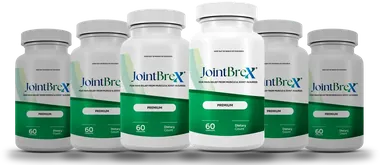
Ready to try JointBrex?
Best value$49 a bottle · $294 for 6
Does glucosamine chondroitin work when trials are pooled?
Pooled trials show a change too small to feel. Wandel and colleagues combined 10 trials with 3,803 patients. They measured pain on a 10 cm line, and set 0.9 cm as the smallest change patients can actually notice (Wandel et al., BMJ 2010).
Wandel 2010: pain reduction versus placebo on a 10 cm scale
Joint space, a sign of cartilage on X-ray, changed by 0.2 mm or less. Trials without industry funding showed smaller effects than industry-funded ones. The authors advised against paying for new prescriptions of these supplements.
What did the Cochrane review find for chondroitin?
Cochrane found a small short-term benefit, but mostly from low-quality trials. Pain was about 10 points lower on a 0 to 100 scale. Put another way, 53 of 100 people on chondroitin reached a 20% pain improvement, versus 47 of 100 on placebo (Singh et al., Cochrane 2015 (chondroitin)).
Joint space narrowed 0.18 mm less over 2 years. Side effects were not more common than on placebo. Low-quality trials tend to overstate benefits, so these numbers are a ceiling, not a floor. Chondroitin is often sold with glucosamine, which is why it matters here. Our chondroitin guide has the full detail.
- 1
Who paid?
Industry-funded trials showed bigger effects than independent ones.
- 2
How many people?
Small trials swing more by chance. GAIT had 1,583.
- 3
Did it beat placebo?
Improving is not enough. The question is by how much more than a dummy pill.
- 4
Could you feel it?
A change below 0.9 cm on a 10 cm line is hard to notice.
Does glucosamine work for arthritis? What the ACR guideline says
The ACR says no, strongly. The 2019 American College of Rheumatology and Arthritis Foundation guideline strongly recommends against glucosamine for knee and hip osteoarthritis. It also recommends against chondroitin for knee and hip OA (ACR/Arthritis Foundation guideline, 2019).
The 2026 update kept that view. It strongly recommends against glucosamine, chondroitin and their combinations for knee, hip and hand OA (ACR OA guideline update summary, 2026). NCCIH, part of the NIH, says it is still uncertain whether they help knee OA symptoms.
The guideline did not judge every joint ingredient. Most herbal products were left out of the 2019 review, so boswellia and turmeric were not assessed. That is not a thumbs-up. It just means the strong "against" applies to glucosamine and chondroitin, not to every ingredient in a joint blend.
Why do some people say glucosamine works for them?
Placebo and timing explain a lot. In GAIT, 60.1% of people taking a dummy pill improved by at least 20%. That is a big number, and it shows how much joint pain changes on its own.
Pain also comes in waves. People often start a supplement on a bad week. When the next week is better, the pill gets the credit. Starting to walk more at the same time adds to the effect.
None of this means people are imagining things. It means a personal story cannot tell you what the pill did. Trials can, because they compare with placebo. That is also why posts on Reddit and review sites disagree so much.
- Placebo response in GAIT: 60.1%Large
- Pain that goes up and down on its ownCommon
- New habits started at the same timeOften
- Proof the pill itself caused the changeMissing
Start your 60-day window today
Best value$49 a bottle · $294 for 6
Is glucosamine safe, and how much glucosamine per day was studied?
For most adults it is well tolerated. Large studies found no major safety problems, and GAIT's side effects were mild and similar across groups. Still, three cautions matter (NCCIH, Glucosamine and Chondroitin, 2023):
- Blood thinners: regulators have logged INR rises in people on warfarin who started glucosamine (HSA Singapore, Warfarin-glucosamine, 2009).
- Blood sugar: glucosamine may raise blood sugar in some people, so people with diabetes should check levels.
- Shellfish allergy: most glucosamine comes from shellfish shells. Ask an allergist first.
Most trials used 1,500 mg a day. Wandel treated less than 1,500 mg a day as below the useful dose.
Read the glucosamine guide and side effects page for more.
Where does JointBrex fit if glucosamine evidence is weak?
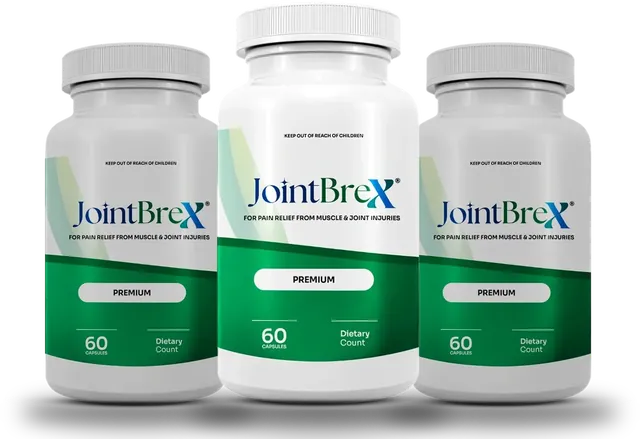
Honestly, JointBrex is a modest add-on, not a fix. Its largest ingredient is glucosamine sulfate at 1,000 mg, below the GAIT dose. Its chondroitin is 100 mg. Its boswellia, at 133.3 mg, is the ingredient inside a studied range, with mixed but more hopeful results (Yu et al., 2020). No study has tested the JointBrex formula itself.
If you still want to try it, put exercise first and use the 60-day money-back window to decide. Start with the joint pain guide and see packs and prices when you are ready.
Does glucosamine work? Questions
Does glucosamine work for joint pain?
For most people, the best trials found little or no benefit over placebo. GAIT, with 1,583 adults, found no significant overall difference, and pooled trials showed pain changes too small for patients to notice.
Does glucosamine work for knee pain?
The evidence says probably not in a way you would feel. Most trials studied knee osteoarthritis, and the 2019 ACR guideline strongly recommends against glucosamine for knee and hip OA.
Does glucosamine chondroitin work better together?
Slightly better numbers, but still not significant. In GAIT the combination scored 6.5 points above placebo (P=0.09), and Wandel found a 0.5 cm pain change, short of the 0.9 cm patients notice.
Can glucosamine help with arthritis?
Major guidelines say it is unlikely to help osteoarthritis enough to matter. NCCIH calls the benefit for knee OA symptoms still uncertain. It is not a treatment for any type of arthritis.
Does glucosamine rebuild cartilage?
No good trial shows that. GAIT's 2-year follow-up found no joint-space difference from placebo, and Wandel found joint-space differences of 0.2 mm or less.
How much glucosamine per day was used in studies?
Most trials used 1,500 mg a day, often as 500 mg three times daily. JointBrex lists 1,000 mg per 2 capsules, which is two thirds of that amount.
Can glucosamine make joints worse?
The big trials did not show joints getting worse. In GAIT, side effects were mild and similar across all groups, placebo included. See a doctor if a joint gets more swollen or painful.
Does glucosamine work for back pain?
The main trials studied knee and hip osteoarthritis, so they do not answer that question. Back pain has many causes. A doctor or physical therapist can help find yours.
Why do some people on Reddit say glucosamine works?
Placebo response in joint trials is large: 60.1% of GAIT's placebo group improved. Pain also comes and goes, so a good week after starting a pill can feel like proof.
Ready to try JointBrex?
Order from the U.S. authorized merchant, keep your order email, and you are covered by the 60-day money-back guarantee. Questions first? Call +1 (302) 200-3480.
- Secure checkout
- 60-day money-back window
- Ships from the US
- Tracking by email
Keep reading
Glucosamine sulfate
1,000 mg from crayfish shell; GAIT, Wandel and the ACR guideline; warfarin, blood sugar and eye pressure.
Read more →Chondroitin sulfate
100 mg against 800–1,200 mg in trials; Cochrane, GAIT and ACR findings; the warfarin caution.
Read more →Daily moves for stiff joints
Walking, tai chi, weight and a 15-minute routine: the habits with the strongest evidence.
Read more →