
Turmeric in JointBrex: Plain Root Powder, Research and Safety
JointBrex contains 100 mg of plain turmeric root per 2 capsules, not a curcumin extract. Knee trials mostly used about 1,000 mg of curcumin and found lower pain scores, but trials were short and mixed. Turmeric is a rare cause of liver injury and can raise bleeding risk with warfarin. Avoid it with gallstones.
What is the turmeric in JointBrex?
A small amount of plain root powder, not the extract used in most trials.
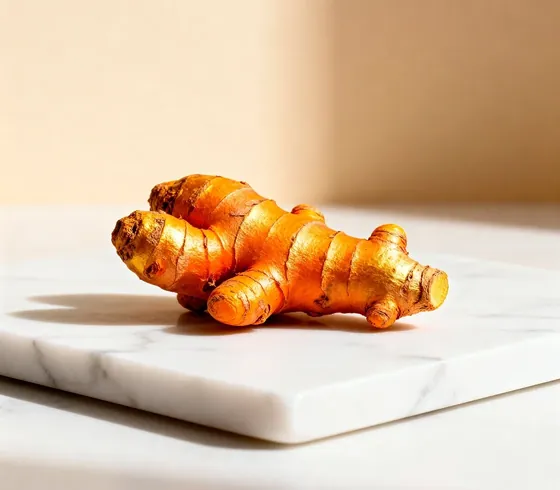
JointBrex contains 100 mg of turmeric root per serving of 2 capsules. The label lists it as turmeric (Curcuma longa, root).
This is plain root powder, the same kind of spice used in curry. It is not a curcumin extract.
The sales page calls this ingredient "Turmeric (curcumin)". The bottle label says root. We follow the label, because it is the legal product description.
You can see it on the full Supplement Facts panel, fourth line down.
- Curcuma longa
- Root powder
- 100 mg per 2 capsules
- Not a curcumin extract
- No black pepper listed
Turmeric root powder vs curcumin extract: what is the difference?
Same plant, very different doses.
Root powder is the whole dried root, ground up. A curcumin extract pulls out the yellow compounds and concentrates them. The research and the safety warnings depend on which form you mean.
This is the form in JointBrex. Root powder is only partly curcumin, so 100 mg of root holds well under 100 mg of curcumin. The label does not say how much.
Most knee trials used extracts. The authors of one meta-analysis cite about 1,000 mg of curcumin a day (Daily et al., 2016). That is ten times the weight of the whole JointBrex turmeric serving.
Some products add black pepper (piperine) or special particles so the body absorbs more. LiverTox links these forms to several liver injury cases (LiverTox, Turmeric, 2025). JointBrex lists no piperine.
Turmeric used as a spice in cooking is not the focus of the supplement warnings. New Zealand's warfarin warning, for example, does not apply to turmeric in food (Medsafe NZ, Turmeric and warfarin, 2018).
How much turmeric for joint pain did studies use, and how does JointBrex compare?
About one tenth of the trial weight, and a weaker form.
Turmeric doses vary from 100 mg to more than 1,000 mg a day, LiverTox says (LiverTox, Turmeric, 2025). Knee trials mostly tested curcumin extracts near the top of that range. JointBrex sits at the very bottom, with plain root.
Turmeric by weight (bar length = share of 1,000 mg)
The real gap is wider than the bars show. The bars compare 100 mg of root with 1,000 mg of curcumin. Only part of the root is curcumin, so the curcumin in a serving is smaller still.
In plain terms, the turmeric in JointBrex is a small background amount. It should not be compared with the curcumin trials as if the doses were the same.
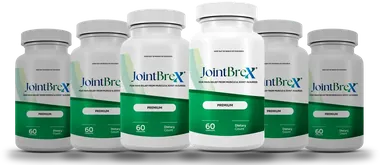
Ready to try JointBrex?
Best value$49 a bottle · $294 for 6
Does turmeric help knee pain? What the research says
Encouraging for extracts, not yet proven, and not tested at this dose.
Turmeric extracts show some promise for knee pain, but the evidence is not strong. Two meta-analyses found lower pain scores than placebo. Both warned that trials were small, short or very different from each other (Daily et al., 2016, Wang et al., 2021 (meta-analysis)).
Turmeric and curcumin research for knee osteoarthritis
| Source | What it found | The catch |
|---|---|---|
| Daily et al., 2016 | Pain fell about 2 points on a 10-point scale versus placebo (3 trials); WOMAC fell about 15 points (4 trials); no clear difference versus pain medicines | Too few trials, people and quality for firm conclusions |
| Wang et al., 2021 (meta-analysis) | 16 trials, 1,810 adults: better pain and function than placebo, similar to NSAIDs | Very high differences between trials (I² 86–90%); studies short-term; no change on imaging |
| MSK About Herbs, Turmeric, 2026 | About as effective as acetaminophen or an NSAID for knee pain | Did not change joint fluid or cartilage on scans |
| NCCIH, Turmeric, 2025 | Early evidence for knee osteoarthritis is encouraging | Cannot yet conclude turmeric or curcumin helps any condition |
None of these trials used 100 mg of plain root. So even the positive results do not tell us what the turmeric in JointBrex does on its own. No study has tested the full formula.
Reasons for interest
- Several reviews point toward less knee pain with extracts
- Results were similar to common pain medicines in some trials
- Side effects are usually mild stomach upsets
Reasons for caution
- Trials were short and very mixed
- No change in cartilage or joint fluid on imaging
- The JointBrex dose is far below trial doses
Is turmeric bad for your liver?
Rare, serious, and mostly tied to strong curcumin products.
Turmeric can rarely cause liver injury, and LiverTox rates the link as well documented (LiverTox, Turmeric, 2025). Cases usually start 1 to 4 months after someone begins a product. Most involve high-dose curcumin or forms boosted with black pepper or special particles.
One case involved 1,000 mg of curcumin a day with black pepper. A fatal case involved 500 mg a day. A gene type (HLA-B*35:01) showed up in more than 70% of cases, which suggests some people are more at risk. NCCIH also warns that highly absorbable curcumin products may harm the liver (NCCIH, Turmeric, 2025).
JointBrex uses 100 mg of plain root and lists no piperine. That is a lower-risk setup than the products in most reports, but MSK notes that liver injury has been reported with low-dose products too (MSK About Herbs, Turmeric, 2026).
Turmeric and blood thinners: what JointBrex users on warfarin should know
The interaction with the clearest warning.
Turmeric supplements can raise bleeding risk with blood thinners. New Zealand's medicines regulator described a patient whose INR, a clotting test, rose above 10 within weeks of starting a turmeric product (Medsafe NZ, Turmeric and warfarin, 2018). Medsafe says to avoid turmeric or curcumin products with anticoagulants, antiplatelets, NSAIDs or SSRI antidepressants.
Medicines to raise with your doctor before turmeric
| Medicine type | Examples | Why it matters |
|---|---|---|
| Anticoagulants | Warfarin | INR can rise; bleeding risk |
| Antiplatelets | Clopidogrel, daily aspirin | Curcumin has antiplatelet effects of its own |
| NSAIDs | Ibuprofen, naproxen | Bleeding may be prolonged |
| SSRIs | Some antidepressants | Bleeding may be prolonged |
| Tacrolimus | Transplant medicine | MSK says do not combine |
This matters more in JointBrex than in a turmeric-only product. Glucosamine, bromelain and quercetin in the same capsule also have blood-thinner warnings. Our post on joint supplements and blood thinners explains each one.
Who should avoid turmeric supplements?
Four quick questions before you start.
People with gallbladder, bile duct or liver problems should skip turmeric supplements unless a doctor says otherwise. The European herbal monograph says it is not recommended with bile duct blockage, inflamed bile ducts, liver disease or gallstones (EMA herbal monograph, Curcuma longa, 2018).
Common side effects are mild: nausea, reflux, diarrhea, constipation, dry mouth and gas (NCCIH, Turmeric, 2025). People prone to kidney stones should ask a doctor too. The JointBrex side effects page covers the whole formula.
Turmeric and glucosamine together: how turmeric fits in JointBrex
A small supporting role next to glucosamine and boswellia.
Turmeric is a supporting ingredient in JointBrex, not the main one. The formula is built around glucosamine sulfate at 1,000 mg. Turmeric and boswellia add herbal extras.
Turmeric next to the other main JointBrex ingredients
| Ingredient | Amount | Research picture |
|---|---|---|
| Glucosamine sulfate | 1,000 mg | Below trial doses; ACR strongly recommends against it |
| Boswellia extract | 133.3 mg | Inside the 100–250 mg trial range; mixed results |
| Turmeric root | 100 mg | Plain root; trials used about 1,000 mg curcumin |
| Chondroitin sulfate | 100 mg | Far below trial doses; ACR strongly recommends against it |
The 2019 ACR guideline did not assess turmeric, because most supplements were left out (ACR/Arthritis Foundation guideline, 2019). It strongly recommends exercise and, for people with overweight, weight loss.
If turmeric is the ingredient you care about most, know that the amount here is small. Compare all nine on the JointBrex ingredients page.
Turmeric questions
Does turmeric help knee pain?
It may help a little, but it is not proven. Meta-analyses of curcumin and turmeric extracts found lower knee pain scores than placebo (Wang et al., 2021 (meta-analysis)), yet trials were short and varied a lot. NCCIH says it cannot yet conclude that turmeric helps any condition (NCCIH, Turmeric, 2025).
How much turmeric should I take for joint pain?
There is no agreed dose. Trials pooled by Daily and colleagues used about 1,000 mg of curcumin a day (Daily et al., 2016). JointBrex gives 100 mg of plain turmeric root, which is far less curcumin than that.
Is the turmeric in JointBrex curcumin?
No. The label lists turmeric (Curcuma longa) root, 100 mg. The sales page calls it curcumin, but root powder is only partly curcumin. The label is the version to trust.
Can you take turmeric and glucosamine together?
Many joint products combine them, including JointBrex. No trial has tested this exact mix. Both can matter with warfarin, so anyone on a blood thinner should ask their prescriber first.
Is turmeric bad for your liver?
In rare cases it can harm the liver. LiverTox calls turmeric a well-documented cause of liver injury (LiverTox, Turmeric, 2025), mostly with high-dose or high-absorption curcumin products. Stop and call a doctor if you notice yellow skin or eyes or dark urine.
Can you take turmeric with warfarin?
Not without your doctor's advice. New Zealand's regulator reported an INR above 10 in a patient on warfarin after a turmeric product (Medsafe NZ, Turmeric and warfarin, 2018). It advises avoiding turmeric supplements with blood thinners.
Can you take turmeric if you have gallstones?
The European monograph says it is not recommended with gallstones, bile duct blockage or liver disease (EMA herbal monograph, Curcuma longa, 2018). Ask your doctor before using any turmeric supplement if you have gallbladder trouble.
What are the side effects of turmeric supplements?
Most are mild stomach problems. NCCIH lists nausea, reflux, stomach upset, diarrhea and constipation (NCCIH, Turmeric, 2025). Liver injury is rare but serious.
Can I take turmeric every day?
Conventional oral forms are likely safe for up to 2 or 3 months, NCCIH says (NCCIH, Turmeric, 2025). Longer use has less data. Tell your doctor if you plan to take it for months.
Is turmeric safe during pregnancy?
Turmeric supplements in pregnancy may be unsafe, according to NCCIH. Turmeric as a food spice is a different matter. The JointBrex label says it is not for pregnant or nursing women.
Ready to try JointBrex?
Order from the U.S. authorized merchant, keep your order email, and you are covered by the 60-day money-back guarantee. Questions first? Call +1 (302) 200-3480.
- Secure checkout
- 60-day money-back window
- Ships from the US
- Tracking by email
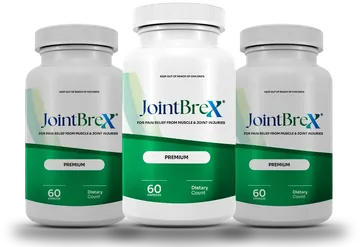
Keep reading
Ingredients
All eight label ingredients with amounts, the shellfish line and how each dose compares with research.
Read more →Boswellia
Frankincense resin extract at 133.3 mg, inside the studied range. Modest, mixed trial results.
Read more →Joint supplements and blood thinners
Glucosamine, turmeric, bromelain and quercetin with warfarin and newer blood thinners, plus a checklist.
Read more →